
Staying Hydrated When It's Hot: Why Older Bodies Dehydrate Faster
Here’s a small experiment you can run on yourself right now. Think back over today, and count the glasses of water you’ve actually had.
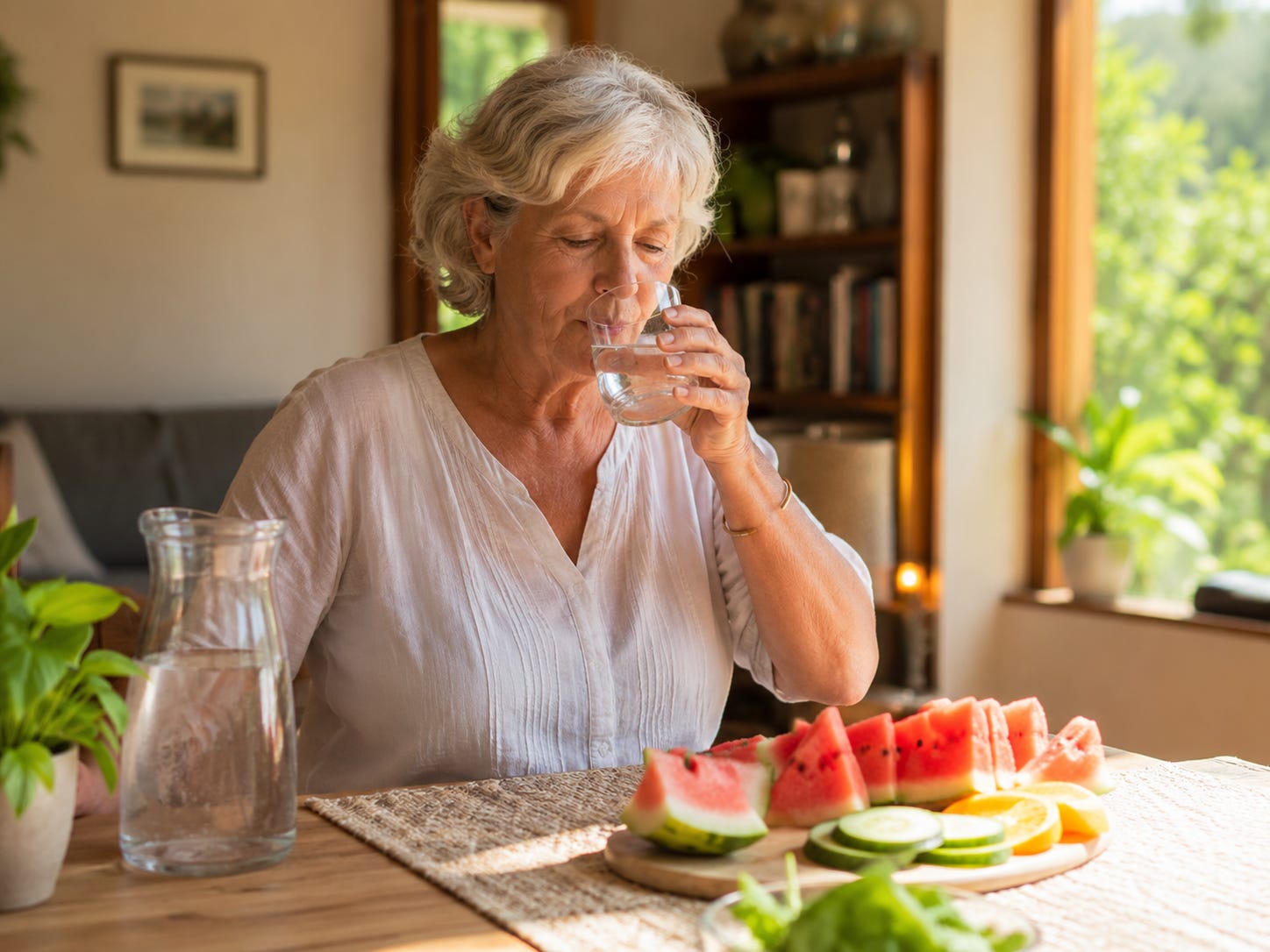
For a lot of people, on a hot afternoon, the honest answer is: fewer than you’d have guessed. And here’s the part that matters — you probably haven’t felt especially thirsty about it. That’s not carelessness. It’s one of the quietest changes of getting older, and almost nobody warns you about it.
A few days ago I wrote you the first half of this: how to keep your home cool and safe when a heatwave hits. This is the other half, and it’s the one I think surprises people most — because it’s happening on the inside, where you can’t see it, and where the alarm you’ve trusted your whole life has gone quiet.
The Signal That Stops Working
For most of your life, thirst was a reliable messenger. You got low on water, you felt thirsty, you drank. Simple.
With age, that messenger gets slower and quieter. Researchers describe it as a “blunted thirst sensation”: an older body needs to be more dehydrated than a younger one before it registers thirst at all. Which means, on a hot day, you can be genuinely low on fluid and still not feel the urge to drink. The gauge isn’t broken, exactly. It just reads late — sometimes far too late.
And it doesn’t come alone. The same review points to a second change: aging kidneys are less able to hold on to water, so an older body loses fluid a little faster even as it signals for it a little slower. Slower to feel it, quicker to lose it. That’s the whole trap in one sentence.
Sit with what that means for a hot week. If you drink only when you feel thirsty — the completely sensible rule that served you for decades — you will, on the hottest days, be running behind without knowing it. The advice you were raised on quietly stopped fitting the body you have now.
This is exactly why heat is so risky for older adults specifically, and it’s the reason the National Institute on Aging’s very first hot-weather instruction is not “drink when thirsty” but the opposite: drink more than usual, and don’t wait until you’re thirsty.
The Signs You’re Already Behind
Because thirst arrives late, it helps to know the other signals — the ones that show up whether or not you feel dry. Catching these early is the whole game, because dehydration is far easier to fix at the first sign than after it has taken hold.
The early ones are quiet and easy to blame on the heat itself: a dry mouth or lips, a headache, unusual tiredness, a little dizziness when you stand, or a urine color that’s gone dark. Muscle cramps are another early flag, especially after a sweaty afternoon. Any one of these on a hot day is worth a glass of water and a sit-down in the cool, right then.
And one sign matters more than all the rest, so I’ll set it apart: new confusion, or a sudden fog and unsteadiness — in you or in someone you’re watching over — is not a “drink some water” moment. It’s a “cool down and get help” one. Confusion is where dehydration and heat illness overlap into an emergency, and the person it’s happening to is usually the last to notice. If it’s someone else, don’t wait for them to agree they’re unwell.
The Days That Catch People Out
Some days tip you into trouble faster than an ordinary hot one, and they’re worth watching for in advance:
The day after being unwell. A bout of stomach upset, diarrhea, or a fever empties your reserves; a hot day on top of that is a double hit. Keep drinking extra while you recover, not just once you feel steady again.
A hot, sticky night. Heat doesn’t clock off at sunset. You keep sweating in your sleep and wake up already behind — which is exactly why that first morning glass earns its place.
A busy day away from the kitchen. Errands, an outing, a long wait somewhere — the hours you’re not near your own tap are the hours the count quietly drops. Take a bottle along; don’t gamble on finding water out there.
A new prescription. If a medication changed recently, its effect on fluid and heat may have changed too. That’s a quick, worthwhile word with the pharmacist.
None of these mean staying home with a chart. They just mark the afternoons to keep the glass a little closer than usual.
A Day of Water, on a Rhythm
If thirst can’t be trusted to remind you, the fix is simple: stop relying on the reminder. Put the water on a schedule instead of a feeling. Here’s what an easy, unforced hot day can look like — not a rulebook, just a rhythm you can lean on:
On waking: a full glass before anything else. You lose water overnight, so morning starts you already a little behind.
With breakfast, lunch, and dinner: a glass at each. Tying water to meals means you never have to remember it on its own.
Mid-morning and mid-afternoon: a glass at each — the two stretches when the day is heating up and it’s easiest to forget.
Early evening: one more, but ease off close to bedtime so you’re not up all night.
Two small tricks make that stick without any willpower. Keep a filled bottle wherever you sit — water you can see is water you’ll drink. And fill a jug for the day and empty it into your glass as you go, so a single glance tells you whether you’re on track. The gauge your thirst no longer provides, you can just set on the counter.
When Water Feels Like a Chore
Plain water gets dull, and a dull drink is one you skip. So make it easy to want:
Cool, not ice-cold, and flavored if you like. A few slices of lemon, cucumber, orange, or a sprig of mint turns a chore into something you reach for. Cold herbal teas, hot or iced, count too.
Eat your water. Water-rich foods add up — watermelon, cucumber, oranges, berries, tomatoes, lettuce, yogurt, and broths and soups all pull real weight, and they’re gentle on a hot day when appetite fades. A bowl of cold soup is a glass of water you can eat.
On the sweatiest days, think electrolytes. When you’re sweating hard or fighting cramps, plain water isn’t the whole answer — the NIA notes that drinks with electrolytes help, especially with heat cramps. A sports drink, watered down, or a broth does the job.
Go easy on what dries you out. Alcohol and a lot of caffeine work against you in the heat, and very sugary drinks aren’t ideal either. They can go in the day; they just shouldn’t be the day.
Use color as your final check, since thirst won’t do it: pale yellow or clear usually means you’re keeping up; dark means catch up.
One Important Exception — Ask First
I have to add a caveat here, and it’s a real one, not a formality.
Not everyone should simply drink more. If you have a heart or kidney condition, your doctor may have you on a fluid limit or on water pills, and in that case “just drink more water” can be the wrong advice for your body. Both the CDC and the NIA say the same thing: if your doctor limits your fluids, ask them specifically how much you should drink in hot weather.
That’s a two-minute phone call, and it’s worth making before the heat arrives rather than in the middle of it. It doesn’t contradict anything above — it just means your right amount is a number your doctor helps you set, not one a newsletter can.
The same goes for medications. Several common ones — water pills, some blood pressure and heart medicines, certain others — change how the body holds fluid and handles heat. Don’t stop or adjust anything on your own. Just ask, this week, whether any of yours need a hot-weather plan.
If You’re Helping Someone Else Stay Hydrated
Plenty of you are reading this with someone else in mind — an older parent, a spouse a few steps further down the road. Because a fading thirst signal is hardest to catch in the person living it, a little help from the outside goes a long way. A few things that work better than reminding:
Offer, don’t ask. “Would you like some water?” is easy to wave off. A glass simply set down within reach, and quietly refilled, gets drunk far more often than one that has to be requested.
Make it pleasant, not medicinal. The same tricks apply — cool water, a slice of lemon, a bowl of cold fruit alongside. Nobody keeps up a habit that feels like a prescription.
Read the color and the mood, not the complaints. They may never once say they’re thirsty. Dark urine, a new tiredness, or a flicker of confusion tells you more than their words will.
Keep it kind. Nagging turns water into a battleground and makes everyone dig in. A shared jug on the table, both of you dipping into it through the afternoon, does more than any lecture.
And hold that one red flag at the front of your mind: sudden confusion in someone you’re caring for is a cool-down-and-call moment, not a sip-of-water one.
What This Really Comes Down To
Dehydration in older adults isn’t a story about willpower or forgetfulness. It’s a story about a warning light that dims with age, on a system that also happens to leak a little faster than it used to. Once you know that, you stop waiting for a feeling that’s no longer coming, and you start drinking on purpose. That single shift is most of the protection.
So through the hot stretch: a glass on a rhythm, water-rich food on your plate, one honest glance at the color that tells the truth, and — if your doctor has ever mentioned fluids or water pills — one quick question answered.
You spent a lifetime trusting your thirst to tell you when. The kind thing now is to stop asking it to do a job it can’t quite manage anymore, and to take that job over yourself.
Fill the glass before you feel like you need it. On a hot day, later in life, that’s not fussing. That’s just how it works now.
(This was part two of two on getting through a heatwave — the first, on keeping your home cool and safe, is here. If you want the winter version of all this, I also wrote about why older bodies quietly dehydrate in the cold.)


