


One of the nicest surprises of writing We Get Better With Age is discovering what happens to an article after I send it out. Sometimes a reader replies with a question or tells me about an experience of her own. Occasionally, someone disagrees with me, which can lead to an interesting conversation.
But a few weeks ago, I heard from a reader who had taken things considerably further.
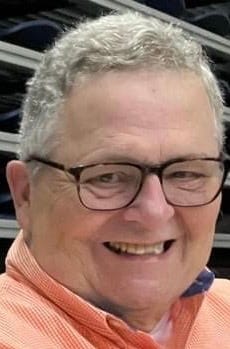
His name is John Bennett. He’s almost 84, a retired engineering professor living in Virginia, and he’d been using WGBWA articles to lead a weekly discussion group at a local lifelong learning institute.
I was thrilled. Here was a room full of people getting together to discuss subjects we’d explored in the newsletter, bringing their own experiences, questions, and opinions to the conversation.
John began sending me updates about the classes. I learned which subjects interested participants, where the conversations went, and what they wanted to explore next. He even sent me a list of topics the group had suggested, including several I hadn’t written about yet.
The more John told me, the more I wanted to share his story with you. When I suggested writing about the group, he was enthusiastic about the idea and generous with the details.
And I think there’s something in his story for all of us.
A professor who never stopped learning
John spent 29 years at the University of Connecticut, working as an engineering professor and academic administrator. Teaching was a large part of his professional life, although he has always preferred the word facilitating.
He likes getting people involved, asking questions, and encouraging them to explore different ways of thinking. His university classes included group activities, and he frequently reminded students that engineering approaches could be useful well beyond engineering problems.
After retiring, John and his wife moved from Connecticut to Virginia to be closer to their daughter and her family.
He became involved with the Lifelong Learning Institute in Chesterfield, which offers continuing education and social activities for adults aged 55 and older.
John began facilitating courses there, including one called Engineering Your Life, which explored how engineering thinking could be applied to everyday decisions.
Then his daughter introduced him to We Get Better With Age.
He enjoyed the articles, subscribed, and started sharing them with family and friends. Before long, he saw an opportunity to turn that interest into something more.
He proposed a course built around discussing the newsletter. The Institute accepted, and the first sessions began in September.
John found something he enjoyed reading, recognized an opportunity to share it, and put his experience to work in a new setting. He was doing something familiar, with different material and different people, because it interested him.
And he was still learning himself.
As John explained:
“I’m a learner and user of the things in the newsletters just as they are.”
He believes a good discussion helps everyone understand a subject better, including the person leading it. After nearly three decades at a university, he still doesn’t need to be the person who knows everything in the room.
The class that wanted more time
The group has discussed a wide range of subjects already, from smartphones, muscle loss, and eyesight to loneliness, solitude, and the difference between avoidance and acceptance.
John prepares reading material and questions, but the conversation belongs to the participants.
Sometimes the discussions are lively enough that he has trouble keeping everyone on topic. Other weeks are less successful. In one email, he described a sunny October afternoon when only ten people attended and the discussion wandered rather than developing as he’d hoped.
Anyone who has tried to organize something involving other people knows that enthusiasm doesn’t guarantee a brilliant gathering every time.
Still, the group seems to be finding something worth returning for.
One of my favorite details came when John told me the participants wanted to extend the class from 60 minutes to 90.
He checked with the Institute, but the building closes soon after their scheduled session. They eventually managed to add another 15 minutes.
These were people voluntarily attending a class, with no exam to pass and no qualification to earn, asking for more time to discuss what they’d read.
More than a discussion group
Some participants already knew one another, while others met through the course. They chat before class and in the Institute’s lounge, and some have started spending time together outside the sessions.
At one point, participants approached John and asked if they could discuss loneliness. By coincidence, he’d already chosen loneliness versus solitude for their next meeting.
When they did discuss it, they talked about the importance of socializing in different ways, having a really good friend, and making room for solitude, too.
It seems fitting that those conversations were happening in a place where new friendships were beginning.
John has made new friends himself.
Moving to Virginia brought him closer to his family, but the courses have also helped him build a social life of his own. He’s continuing something he loved about his university career while meeting new people and exploring subjects that interest him.
And the conversation doesn’t end when the class is over.
When participants suggested subjects for future meetings, John went through the WGBWA archive looking for articles that might fit. He later told me he’d done much of it the old-fashioned way, clicking through links and making notes with pen and paper.
He sent me the list, including the topics he couldn’t find anything about. I now have a few ideas for future articles, courtesy of a classroom in Virginia.
At almost 84, John is making plans for next spring. And I suspect the people in his class are already looking forward to it.
I’d love to hear more stories like John’s
John’s emails reminded me of something I’ve been thinking about for almost a year.
Last December, I published Never Too Late Stories: Seniors Who Started Something New at 70+, followed by a second collection in January. I loved finding those stories, and I’ve wanted to do more of it ever since.
But perhaps I don’t need to look very far.
There are more than 22,000 of us here at WGBWA, and I’m willing to bet that many of you have stories worth sharing. Maybe you’ve discovered a new interest, made an unexpected friendship, returned to something you used to love, or found a way to make a difference in your community.
It doesn’t need to be an extraordinary achievement. In fact, I’m especially interested in the smaller things that make everyday life richer.
I think we could all use more stories about the good things happening in the world. There’s no shortage of difficult news, and I’m certainly not suggesting we ignore it. But there’s also so much kindness, curiosity, creativity, and generosity around us, often in places that never make the headlines.
I’d love to give some of those stories a place here.
So, if you have a story you’d like to share, or know someone whose story deserves to be told, please reply to this email. I’d love to hear from you.
Perhaps this could become a regular WGBWA feature.
And John Bennett, thank you for getting us started.