

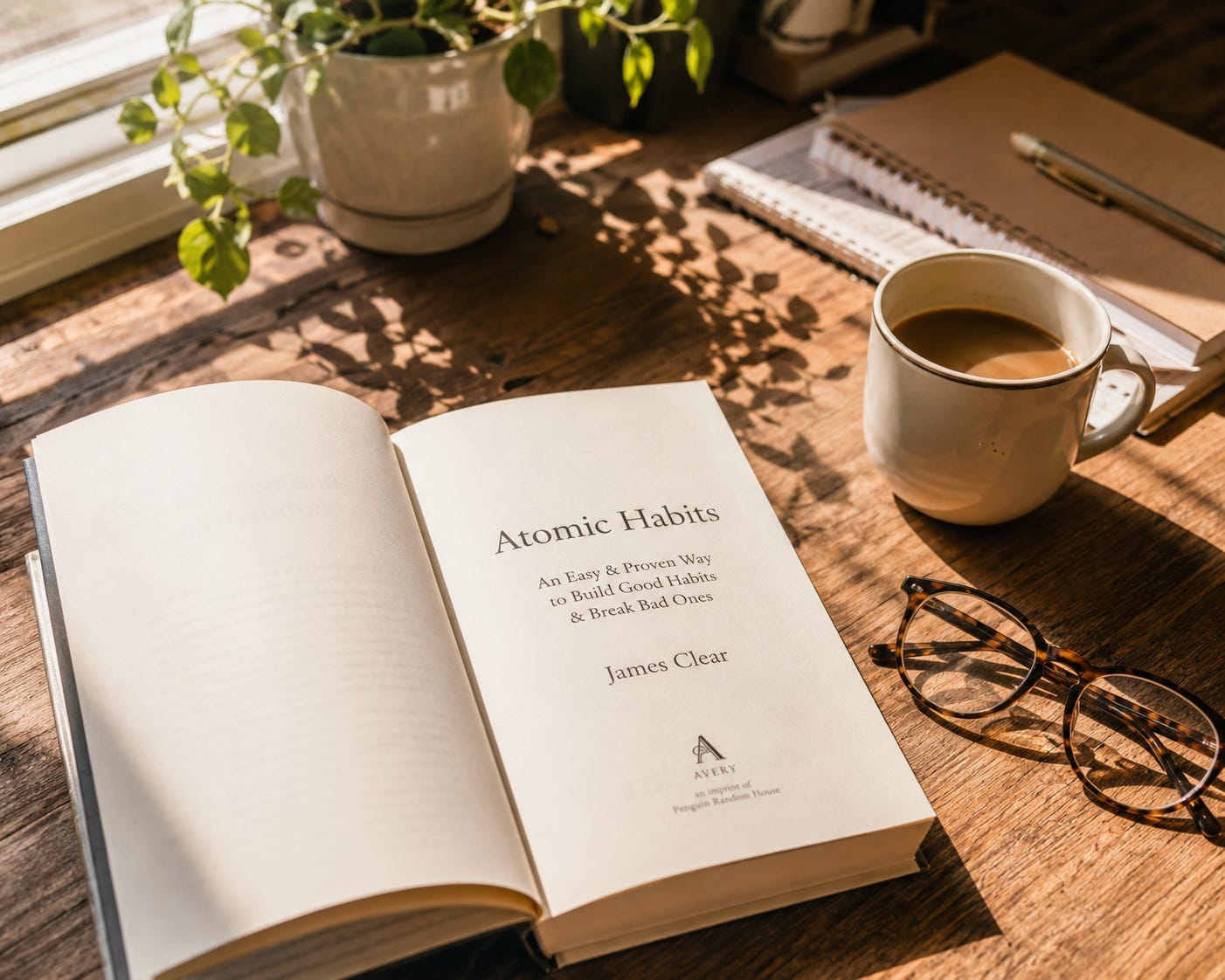
I bet there’s a book on your shelf you’ve never opened.
You know the one. You bought it a year ago, maybe two — the Spanish course, the beginner’s guide to something you’d always meant to try. You brought it home full of intention. You pictured yourself doing it. Then it went on the shelf, and there it stayed, and now you walk past it most days without quite meeting its eye.
The wanting never left. Somewhere along the way, starting got heavy. There’s a small voice that speaks up the moment you reach for it — you’re a bit old to be picking this up now, aren’t you? — and the book goes back to being furniture for another week.
That book is where we start today.
Where we are in the month
Last Sunday we opened August with What Happened to Last Tuesday? — the idea that sameness dims a brain faster than age does, days so automatic they leave no mark. The fix was smaller than it sounds: one new, slightly stretchy thing dropped into an otherwise comfortable week.
This week we take the strongest version of that novelty, and the most intimidating: actually learning something. Not glancing at it. Learning it, badly at first, the way you learn anything real. And we deal head-on with the thing that keeps the book on the shelf — the belief that the window for this closed a while ago.
It didn’t. Here’s what the research found, and then how to begin.
The window didn’t close, and there’s good data on that
Here’s the belief doing the damage: that learning is for the young. That children soak things up because their brains are built for it, and ours, past sixty, are built for holding steady rather than taking on something new.
The study that took this apart most directly is the Synapse Project. Researchers put older adults into different groups for three months. Some did pleasant but familiar things: socializing, listening to music, doing puzzles they already knew. Others were assigned something genuinely hard and new — digital photography, or quilting, or both. Skills with a real learning curve, the kind that make you feel clumsy for weeks.
The result was clear. The groups that stayed comfortable didn’t gain much. The groups pushed into demanding, unfamiliar learning showed significant improvements in memory, and the ones learning the hardest things gained the most. The difference was the struggle itself — being a beginner at something real. Staying busy or having fun barely registered.
More recent work went further. Older adults were able to take on several new skills at once, the way a child does, learning to walk and talk and feed themselves all in the same season, and they came out with measurable cognitive gains. Not one careful skill at a time. Several, together, like a beginner.
The clumsiness you’re avoiding isn’t a sign you’re too old for this. It’s the exact feeling of a brain getting younger.
Read that against the unopened book and something shifts. The discomfort you feel reaching for it — I’ll be bad at this, I’ll be slow, everyone else started younger — isn’t a warning that you’ve missed your chance. It’s the price of the thing you actually want. The clumsiness is the work.
So am I too old to learn this? is the wrong question, and has been for years. The one that matters is quieter: how do I begin, when beginning has come to feel this heavy — and how do I keep going past the first awkward week?
The rest of this article is where it gets practical — how to choose the one thing actually worth learning, the first-step method that makes starting almost too small to refuse, and how to get past the flinch of being a beginner again. It’s the part that gets the book off the shelf.
This is for Plus members — and because August is one theme followed all the way through, membership is more than a single article:
The rest of this article — choosing what to learn, the first-step method, and getting past the beginner’s flinch.
August’s Fun Pack — a brand-new set of around 25 puzzles in five styles (crossword, sudoku, word search, word scramble, word match), themed to this month. Play them online with your progress saved, or print the PDF — large-text and high-contrast built in, answers included. It’s the lowest-stakes way there is to be a beginner again — and a themed puzzle book runs $8–12 in a shop, while yours is new every month.
The full archive — every Sunday deep-dive, yours to revisit.